


The Kilt and the Perception of Masculinity in Scotland

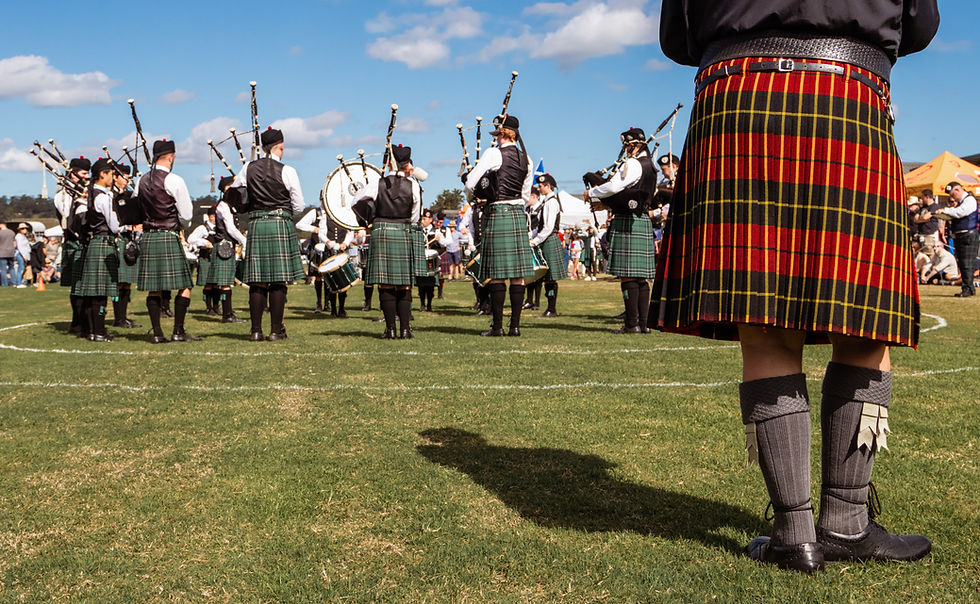
Clothing is not merely an object that covers the body; it also carries the values, identities, and social conventions of cultures. The form of a garment, the fabric used, or the patterns it contains often hold the historical memory of the society to which it belongs. From this perspective, the kilt, the traditional garment of Scotland, can be seen not simply as clothing but as a symbol of a strong cultural identity.
Today, for most people, the kilt is a traditional male garment closely associated with Scotland. Ending around the knee, featuring a pleated structure, and usually made from wool fabric, this garment continues to be worn especially at ceremonies, formal events, and cultural festivals. However, the emergence of the kilt was not merely an aesthetic preference; it was also closely connected to historical and geographical conditions.
The origins of the kilt trace back to the daily life of communities living in the mountainous regions of Scotland. Harsh climatic conditions and difficult terrain required garments that allowed freedom of movement while also providing warmth. Made from wool, the kilt offered a practical solution to this need. Its durable structure provided protection against challenging natural conditions, while its pleated form allowed ease of movement. For this reason, the kilt was not only a ceremonial garment but was also once part of everyday life.
One of the most distinctive features of the kilt is the tartan fabric used in its construction. Tartan consists of a characteristic pattern formed by intersecting lines in different colors. Historically, these patterns were not only an aesthetic choice but also served as markers of clan identity. Each clan had its own unique combination of colors and stripes, and these patterns functioned as a form of visual identification. In this way, a person’s affiliation to a particular community could be recognized through the pattern they wore.
Certain accessories worn with the kilt also form important elements of this traditional attire. One of these is the small waist pouch known as the sporran. Since the kilt itself does not include pockets, the sporran serves both a functional and aesthetic purpose. In addition, long socks, special shoes, and sometimes ceremonial daggers are among the accessories that complete the traditional kilt outfit.
Historically, the kilt was not only part of daily life but also connected to a warrior culture. The use of this garment by Scottish clans during periods of conflict contributed to its association with courage and strength over time. For this reason, the kilt became not only a garment but also a carrier of a particular identity and historical heritage.
One of the aspects that makes the cultural meaning of the kilt especially interesting is the relationship between the form of the garment and social perception. In many Western societies today, garments in the form of a skirt are generally considered women’s clothing. Despite this, the kilt continues to exist as a strong symbol of masculinity within Scottish culture.
This situation raises an important question:
Is a garment perceived as feminine or masculine because of its form, or because of cultural conventions?

The example of the kilt clearly demonstrates that the meaning of clothing is not determined solely by its physical form. The same form can carry entirely different meanings in different cultures. In Scotland, the kilt is associated with historical identity, warrior tradition, and social belonging, while in another cultural context a similar form might evoke completely different associations.
Today the kilt is not commonly worn in everyday life, yet it continues to exist as one of Scotland’s cultural symbols. Worn at weddings, official ceremonies, and national celebrations, the kilt serves as a connection between the past and the present in the modern world.


Comments